


What do 4 Chicks talk about when they get together?
Well, when I sat down with these particular 4 Chicks we cried, we laughed and we talked about CLARITY.
The ladies referred to me as “the Marie Kondo of Clarity” — because of my ability to help entrepreneurs find clarity and purpose. Not sure I’m going to do a reality TV show any time soon… but why not?
Instead of cleaning your closet, I like cleaning the mess in your head. I identify your special skills and purpose and help you communicate the problem you can solve in the world.
In this 4 Chicks podcast interview, I discuss my journey to building Masters In Clarity and helping others to build their businesses from the ground up.
Here’s a guideline to the conversation with 4 Chicks if you are a “skipper” kind of listener: 😉
00:56 Introducing Dolores Hirschmann–Your Idea Worth Sharing!
02:36 Dolores helps MFB clarify her TEDx idea.
03:00 What should be my thing? What do I bring to the world?
04:40 Where does your gift fit in the puzzle of a business?
06:00 Dolores is the Marie Kondo of mental space–clear the clutter!
07:30 Clarity frameworks to get out of your maze–i.e. TEDx talk framework YOU CAN DOWNLOAD IT HERE.
08:25 Robyn talks branding clarity. How can you best serve?
09:20 Dolores built Masters in Clarity agency to help clients execute their vision.
11:00 How do we retain our clarity of mission?
12:00 Executing clarity in a meaningful way when putting the puzzle together is a challenge.
12:50 Service Entrepreneurs–this section is for you!
13:20 Stages of income require different levels of systems and frameworks; so, don’t try to do everything at once!
14:30 Respect the process of building a business and create modules of progress. Don’t try to do everything at once.
15:15 Talk up your business, but lead with the problem you solve!
18:00 Let’s bake some cookies!
20:30 All experience–past and present–has value.
22:00 What to do when the rug is pulled out from under you–after crying, of course!
24:00 Are we living under a bridge, yet?
25:00 Playing the victim movie.
26:45 “At some point, necessity is the best thing that can happen to your confusion.” ~ Dolores Hirschmann
28:40 Be held by the community you create. Rely on your people!
30:30 Trust funnels for sales and marketing: “The sale of a service or a product is a natural harvesting of a trust-based relationship.” ~ Dolores Hirschmann
32:15 Why social media? It’s the game of trust-building.
33:20 Dolores and the TEDx world.
37:20 1200 butts is 1200 butts in chairs!
39:45 MFB did the work!
43:40 Kristin finds clarity made her message resonate farther.
45:25 “Be a steward of your own gut and never let anyone or anything step on your intuition–ever!” ~ Dolores Hirschmann
47:20 “Chick power is beautiful, sexy, strong and inspiring!” ~ Dolores Hirschmann
48:00 The “Idea-preneur” creed: We don’t hoard our ideas and our ultimate goal is positive impact.
Come on over and check out the rest of the interview HERE (embed link: https://4chickschatting.com/index.php/2019/05/04/episode-048-clarify-your-message-with-clarity-expert-dolores-hirschmann/)
By the way, it is my birthday week, therefore I want to give you the GIFT OF CLARITY! Book a CLARITY CALL today and let my team help you get clear on where you need to FOCUS YOUR attention right now. BOOK YOUR CLARITY CALL NOW.
In Clarity,


The Anatomy of a TED Talk: Achenyo Idachaba’s “How I Turned a Deadly Plant into a Thriving Business”
Welcome to our next installment of Anatomy of a Ted Talk!
Can your biggest challenge become your biggest OPPORTUNITY?
Can an IDEA change a community?
In this talk, green entrepreneur Achenyo Idachaba shares her story about changing the stories in her community. From stories of destruction to stories of creation. Achenyo recognized an opportunity in the destructive and invasive growth of water hyacinth, a beautiful flowering plant that’s actually an invasive aquatic weed that clogs waterways, stops trade, interrupts schooling and disrupts everyday life.
Idachaba shares with us the impact she saw when she helped turn these weeds into an opportunity to help the community see these former nuisance as a gift. In this 7-minute TED talk, Idachaba shares how the power that a small IDEA can have.
In a previous Anatomy of a Ted Talk, I introduced you to the FRAMEWORK we use with our clients to create their talks. It breaks down the presentation into different key elements that contribute to an overall great talk. However, this is NOT A FORMULA – it’s a simple framework– the box which holds the sand– so that you can create your unique, authentic talk!
This framework has helped people write TED-style talks, keynote speeches, 5-minute pitches as well as full day-long workshops. This talk can be adapted to the context of your presentation while guiding you to cover the most important elements for effectively connecting with your audience. Our Anatomy of a Ted Talk series is designed to help you understand the elements of a great talk!

Masters In Clarity’s 7 steps to write your talk
Let’s take a look at how Achenyo’s powerful 7-minute talk fits in with the framework!
ENGAGE YOUR AUDIENCE
MINUTE 00:04 “Welcome to Bayeku, a riverine community in Ikorodu, Lagos — a vivid representation of several riverine communities across Nigeria, communities whose waterways have been infested by an invasive aquatic weed, communities where economic livelihoods have been hampered: fishing, marine transportation and trading; communities where fish yields have diminished, communities where schoolchildren are unable to go to school for days, sometimes weeks on end. Who would have thought that this plant with round leaves, inflated stems, and showy, lavender flowers would cause such havoc in these communities.”
INTRODUCE YOUR IDEA
MINUTE 02:42 “And I looked to my left and saw this very arresting image. It was an image of fishing boats that had been hemmed in by dense mats of water hyacinth. And I was really pained by what I saw because I thought to myself, «These poor fisherfolk, how are they going to go about their daily activities with these restrictions.» And then I thought, «There’s got to be a better way.» A win-win solution whereby the environment is taken care of by the weeds being cleared out of the way and then this being turned into an economic benefit for the communities whose lives are impacted the most by the infestation of the weed. That, I would say, was my spark moment.”
INTRODUCE YOURSELF
MINUTE 02:09 “I personally had my encounter with this plant in the year 2009. It was shortly after I had relocated from the US to Nigeria. I’d quit my job in corporate America and decided to take this big leap of faith, a leap of faith that came out of a deep sense of conviction that there was a lot of work to do in Nigeria in the area of sustainable development. And so here I was in the year 2009, actually, at the end of 2009, in Lagos on the Third Mainland Bridge.”
“See, I’m a computer scientist by background and not someone in the creative arts. And so I began my quest to find out how I can learn how to weave.”
PRESENT THE EVIDENCE/DATA
MINUTE 03:30 “And so I did further research to find out more about the beneficial uses of this weed. Out of the several, one struck me the most. It was the use of the plant for handicrafts. And I thought, «What a great idea.» Personally, I love handicrafts, especially handicrafts that are woven around a story. And so I thought, «This could be easily deployed within the communities without the requirement of technical skills.» And I thought to myself, «Three simple steps to a mega solution.”
MINUTE 4:36 “And this quest took me to a community in Ibadan, where I lived, called Sabo. Sabo translates to «strangers’ quarters.» And the community is predominantly made up of people from the northern part of the country. So I literally took my dried weeds in hand, there were several more of them, and went knocking from door to door to find out who could teach me how to weave these water hyacinth stems into ropes. And I was directed to the shed of Malam Yahaya. The problem, though, is that Malam Yahaya doesn’t speak English and neither did I speak Hausa. But some little kids came to the rescue and helped translate. And that began my journey of learning how to weave and transform these dried water hyacinth stems into long ropes.”
MINUTE 5:26 “With my long ropes in hand, I was now equipped to make products. And that was the beginning of partnerships. Working with rattan basket makers to come up with products. With this in hand, I felt confident that I would be able to take this knowledge back into the riverine communities and help them to transform their adversity into prosperity. So taking these weeds and actually weaving them into products that can be sold. So we have pens, we have tableware, we have purses, we have tissue boxes. Thereby, helping the communities to see water hyacinth in a different light. Seeing water hyacinth as being valuable, being aesthetic, being durable, tough, resilient. Changing names, changing livelihoods.”
REMIND THE AUDIENCE OF YOUR IDEA
MINUTE 5:26 “ Taking these weeds and actually weaving them into products that can be sold. So we have pens, we have tableware, we have purses, we have tissue boxes. Thereby, helping the communities to see water hyacinth in a different light. Seeing water hyacinth as being valuable, being aesthetic, being durable, tough, resilient. Changing names, changing livelihoods.”
REVEAL THE NEW REALITY
MINUTE 5:51 «And so, from Makoko community, to Abobiri, to Ewoi, to Kolo, to Owahwa, Esaba, we have changed the story.”
INVITE YOUR AUDIENCE TO TAKE ACTION
MINUTE 06:38 “And I’d like to end with a quote by Michael Margolis. He said, «If you want to learn about a culture, listen to the stories. And if you want to change a culture, change the stories.”
If you are saying to yourself… easier said than done, this formula looks great, BUT not sure how it can work for you, then download the 7 STEPS TO WRITE YOUR TALK framework and let me walk you through it. DOWNLOAD NOW
See more from our Anatomy of a Ted Talk Series HERE!
In Clarity,

Dolores Signature in green
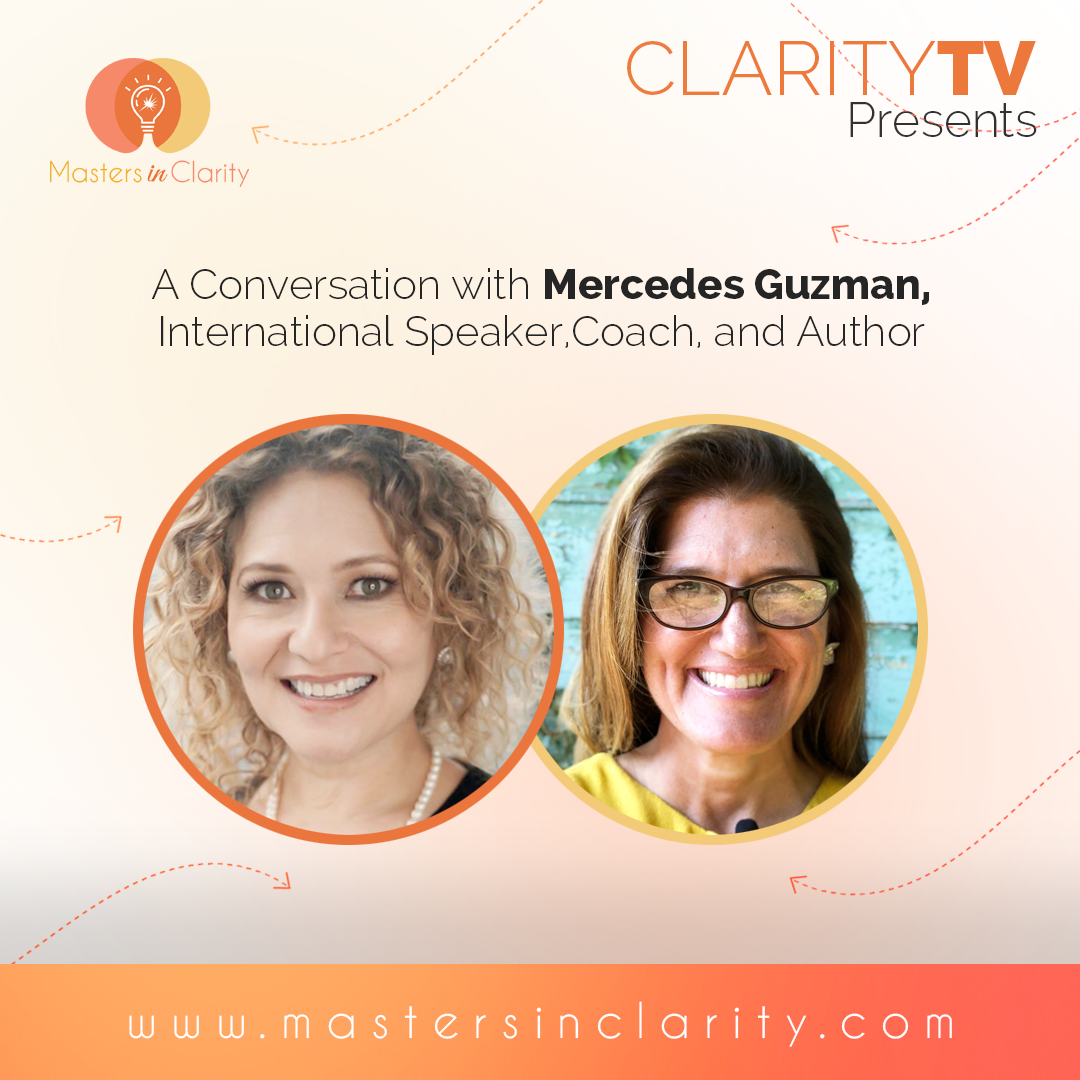
We had the honor of interviewing Mercedes Guzman, the creator of ICLP, a powerful technique to reconnect and heal your inner child. She encourages us to consider the powerful process of self-exploration to find your inner child as the key to finding true emotional freedom.
Mercedes guides her clients to unlock unconscious patterns that were established in childhood. She posits that these patterns are responsible for those areas in our lives where we feel stuck, repeating our mistakes.
The programming we received as children results in we we think of as ‘our inner child’. Even though this programming seems hardwired into us, we have the ability to change it!
As adults, we judge ourselves when we repeat the same mistakes over. However, when we take on the tasks such as identifying where our beliefs come from, we can begin breaking the chains of our childhood programming.
She asks us instead, how can we become the parent our inner child? Mercedes believes that we can heal our inner child and change our stories! This work begins by looking inside to see what needs to be adjusted and healed. Mercedes shares her story of growing up in a country ravaged by war, of being abused as a child, and of how that affected her as an adult. However, these things no longer define her today. She has changed her inner narrative and able to heal as she moves forward into new possibilities!
Mercedes shares that we can create success, healthy relationships with others and ourselves, feelings of love, and financial abundance. By doing this work and allowing our adult selves to run our own show, we are free from the influences that molded us as a child. Breaking the patterns of self sabotage brings the abundance and happiness that we seek!
In Clarity,
PS: Are you ready to take action? Are you ready to be seen? Schedule a complimentary call with our CLARITY COACHES! We can help you create an action plan for you to grow your business by being seen! SCHEDULE A CALL NOW
PS2: If you want to get notified or join us live for our next interview, simply LIKE OUR PAGE

Are you hiding behind your words?
Do you struggle to get your point across?
Do you lose your audience in long explanations?
Have you ever stepped off a stage and no one came up to you to learn more?
You don’t have to continue hiding behind your words! Speaking isn’t easy, but there are some simple things you can do to help engage your audience.
When speaking to an audience of one or thousands, keep in mind these three blind spots that might be getting in the way of engaging and connecting with your audience:
- BLIND SPOT #1: Don’t begin by introducing yourself and your topic, instead meet your audience where they are. Whenever you begin a conversation or a presentation, aim to engage your audience right away by asking relevant questions and/or sharing a relevant story.
- BLIND SPOT #2: Speak their language. Make sure you don’t leave your audience behind, always aim to use language that they will understand. Avoid acronyms or jargon. They might help you sound smart, but if the audience doesn’t understand what you are referring to, they will be less likely to say yes to your invitation, whatever that might be. People want to work with people they align with. They want to work with people that they feel will understand them and make them feel relevant and important. Don’t let fancy language create a gap between you and your audience.
- BLIND SPOT #3: Give room for questions. Whether you are speaking to one person or thousands, it’s always easier to speak AT people rather than WITH people. BUT in order to effectively engage, you must create a conversation. You can do this by leaving room for questions at the end and encouraging conversation throughout the presentation. Another strategy is intentionally inviting your audience’s response/reaction during your time on stage (especially if you are presenting to a large crowd).
Just like a fortress protects a city from outside invaders, words and language can sometimes “protect us” and, as a result, get in the way of true connection.
Aim to connect! Bring down the barriers of complex communication! This will ensure you and your audience can participate in a shared conversation.
In Clarity,