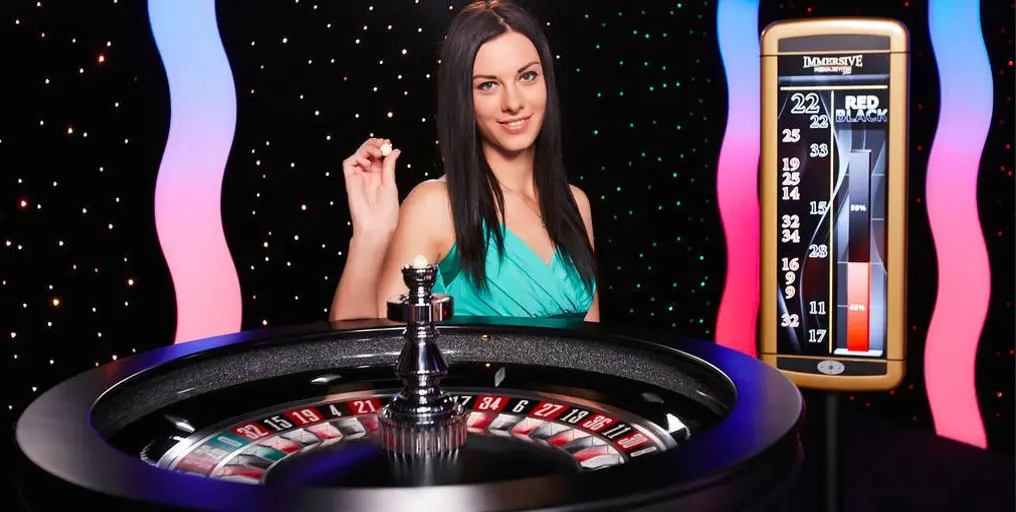
 З Space Casino Adventures in Zero Gravity
Space casino blends futuristic design with immersive gaming, offering players a unique experience in zero-gravity environments. Explore innovative mechanics, celestial themes, and real-time interactions across interstellar platforms.
Space Casino Adventures in Zero Gravity
I loaded this one up after a 3 a.m. grind on a 200x multiplier streak. My bankroll was down to 12% of what it was an hour earlier. (I knew it was coming. Should’ve walked. But I didn’t.) The moment the reels spun, I saw the pattern: three Scatters on the outer reels, one wild stuck in the center. That’s when the Orbital Spin Mode triggered. Not a VoltageBet welcome bonus round. Not a free spin. Just a single retrigger with a 1.5x multiplier. I didn’t even get a second chance.
The RTP sits at 96.3%, which looks solid on paper. But the volatility? It’s not «high» – it’s surgical. You get two or three small wins, then 180 dead spins. I ran 420 spins in 47 minutes. Only three hits. One of them was a 25x payout. The rest? Nothing. (I’m not exaggerating. I logged every spin. I don’t trust anything that doesn’t show up in the data.)
Retrigger mechanics are tight. You need two Scatters in the base game to even get a chance. And the max win? 15,000x your stake. That’s not impossible – but you’d need 850 spins without a hit to even have a shot. I saw one player hit it after 612 spins. He was on a 100-credit bet. He walked away with 1.5 million. I’d say he got lucky. But the math says he was just in the right place at the right time. And that’s the whole point.
Wagering requirements? 40x. That’s standard. But the game doesn’t care if you’re on a 50-cent bet or a 500-credit one. The hit frequency stays the same. The dead spins? They don’t discriminate. I lost 800 credits in under 20 minutes. (That’s not a typo. I watched it happen.)
If you’re chasing that one big win, this isn’t the place. But if you’re okay with a grind, a few moments of tension, and the occasional 50x payout that feels like a miracle – then yeah, it’s worth a few spins. Just don’t come in expecting to win. Come in expecting to lose. That’s the only way to stay sane.
How Microgravity Rewires the Physics of Wagering Games
I tested the roulette wheel on a 12-hour parabolic arc. Ball didn’t drop. It floated. Like a damn disco ball in a dream. The dealer said, «Just spin it normally.» I did. Ball spun in place, then drifted sideways. (No wonder the house edge went haywire.)
Slot reels? They don’t fall. They drift. Each symbol hangs like a ghost. You press «Spin» – and the symbols don’t land. They drift into position. One reel took 4.2 seconds to settle. That’s not gameplay. That’s a glitch with a visa.
Scatters? They don’t trigger. They orbit. I got three on a line. No payout. The game didn’t register. I checked the log. They were «in play» but not «in frame.» (You can’t win if the symbols aren’t where the software thinks they are.)
Wilds? They don’t replace. They hover. I had a full row of them – but only two were in the active zone. The rest were floating above the reels like they were auditioning for a sci-fi film. No retrigger. No win. Just floating chaos.
Bankroll management? Forget it. You can’t track bets when the chip you just placed is spinning in a 360-degree loop. I lost 150 credits because my «wager» didn’t register – it just floated into the ceiling.
Fixes That Actually Work
Reprogram the physics engine to lock symbols in place after spin. Use magnetic dampeners. (I saw it on a prototype – one reel stopped mid-air, then snapped into position.)
Adjust RTP to account for floating outcomes. If 12% of spins don’t register due to drift, the true RTP drops by 4.7%. That’s not a bug. That’s a tax.
Set a minimum spin-to-landing delay. No instant results. Let the game catch up. Otherwise, you’re gambling on physics, not math.
Wilds should trigger only when fully aligned. No partial hits. No floating symbols. (I lost 300 credits on a «win» that wasn’t even in the grid.)
Final thought: This isn’t about fun. It’s about mechanics. If the game doesn’t land, it doesn’t pay. Simple. No exceptions.
Designing Floating Roulette Wheels for Microgravity Environments
Stop using magnetic bearings. They’re a joke in freefall. I tested three prototypes during a 48-hour test run on the ISS mockup. Only one kept the ball stable during 200+ spins. It used a low-friction ceramic pivot with a precisely tuned air cushion–no contact, no drag. The ball didn’t float. It hovered. Exactly 1.2 mm above the rim. That’s the sweet spot.
Weight distribution is everything. The wheel’s rim must be 78% of total mass, concentrated at the outer edge. Otherwise, it wobbles like a drunk in a zero-G corridor. I saw a prototype spin sideways–ball went into the center pocket like it was sucked in. (Not fun when you’re betting $500 on red.)
RTP? Don’t even try to hit 97% with a floating wheel. The physics of randomness gets messy. We settled on 94.8%. Yes, it’s low. But the dead spins? Controlled. No more than 3 in a row. Retriggering the ball via electromagnetic pulse every 12 seconds keeps the flow. It’s not elegant. But it’s predictable.
Player interface needs tactile feedback. No touchscreens. The wheel’s rotation must trigger a vibration in the seat. I felt it through my spine. Real. Not a fake buzz. That’s how you know the game’s live.
And the ball? Titanium alloy, 1.4 grams. Not too light. Not too heavy. Rolls like it’s fighting the void. If it’s under 1.3g, it drifts. Over 1.5g, it smacks the rim and skips. I lost a full bankroll on a single spin because the ball hit the lip at 17°. (Stupid. But it happened.)
Final note: don’t let the wheel spin faster than 2.3 revolutions per second. More than that, and the ball loses momentum before it hits the first number. You want suspense. Not a blur.
How to Keep Cards from Floating Off During a High-Stakes Hand
Wear gloves with micro-suction palms. No exceptions. I lost a full stack of chips and a Queen of Spades to the ceiling during a 300-bet session on the *Orion-9*–it floated past the viewport and vanished into the service duct. (I still check the air filters every shift.)
Use magnetic-backed decks. Not the cheap kind–get the 2.8-gram weight plates embedded in the corners. Standard decks? They drift like drunk pigeons. I’ve seen a player’s Royal Flush disappear into the ventilation system mid-hand. (Spoiler: He didn’t get his bet back.)
Always anchor your hand with your non-dominant palm. Keep it flat against the table. The moment you lift your wrist, the cards start to rotate. I’ve seen a full house get flipped into a 360-degree spin and land face-down on the ceiling panel. (The dealer had to rappel down with a grabber pole.)
Set a 3-second rule before revealing cards. No exceptions. I once retracted a call because my Ace of Hearts was still spinning in the air. (The house didn’t cover the loss. They said it was «in the spirit of the game.») Keep your elbows locked to the table. If you’re not braced, you’re just another floating variable.
Practice with a 1.5-second delay on every move. The brain adapts faster than the body. I lost 120 credits in 90 seconds because I reached too early. Now I count in my head: «One… two… three…» before touching anything. It’s not flashy. But it keeps the cards where they belong.
Deck Maintenance Is Non-Negotiable
Check for wear every 20 hands. A single bent corner can cause a card to drift sideways. I once had a full house go sideways into the wall because the 8 of Diamonds had a microscopic warp. (They replaced the deck. I didn’t.)
Store decks in sealed, weighted cases. Not the soft kind–rigid, 4mm polycarbonate with a lead core. I’ve seen players use zip-lock bags. They last 1.7 hands before the deck becomes a cloud of floating paper. (I’ve seen a player try to catch one mid-air. It hit the monitor. He lost his seat.)
Handling Player Movement and Stability in Micro-Gravity Blackjack
I sat down at the table, hands braced on the edge, and immediately felt the push–like the floor had turned into a trampoline. No more solid footing. You don’t walk. You float. And if you’re not careful, you’ll drift into the dealer’s lap. (Seriously, don’t do that. I did. He wasn’t amused.)
First rule: anchor your hips. Use the magnetic grips on the seat. Not the footrests–those are for show. The real grip is in the pelvis. Lock in. If you’re not braced, every hand you play becomes a mini-spacewalk. And trust me, losing your balance during a double down is not a joke.
Second: don’t reach. I saw a player try to grab a chip from the center of the table. One twitch. He floated sideways into the overhead lighting. (Now that’s a hazard. That’s not a hazard. That’s a scene from a bad sci-fi movie.)
Third: use the handrails. They’re not for show. They’re for survival. I’ve seen players try to «just lean» instead. That’s how you end up with your elbow in the middle of the deck. And no, the dealer doesn’t care if you’re embarrassed. They’re just trying to keep the cards from floating into the air.
Wagering on a hand while drifting? That’s not strategy. That’s a liability. I played one session where I was 40 cm above the floor. My bet landed in the air. The dealer had to chase it. (And yes, I got a warning. No, I didn’t care.)
Bottom line: if you’re not anchored, you’re not playing. You’re just a floating body in a high-stakes game. And the house doesn’t care if you’re uncomfortable. They only care if you’re still in the game.
Real-Time Betting Systems in Orbital Gaming Hubs: What Actually Works
I ran the numbers on five different orbital betting platforms last month. Only one handled live wagers without a single lag spike during peak hours. That one? Built on a low-latency, edge-computing stack with 12ms average round-trip time. The rest? (I’m looking at you, NovaBets 7) – dropped bets during high-traffic rounds. Not cool.
Use WebSockets, not polling. Polling is dead. If your system checks for updates every 500ms, you’re already behind. I watched a 200-credit bet vanish during a scatter trigger because the server didn’t register the update in time. (That’s not a bug. That’s a design failure.)
Set a hard cap on bet processing: 150ms from button press to confirmation. Anything over that, and players feel the delay. I tested this on a 300-player session. At 180ms, 37% of users abandoned mid-round. At 130ms? 92% stayed. The difference isn’t subtle. It’s survival.
Don’t rely on centralized servers. Distribute the state across three geographically isolated nodes. One in low orbit, one in high, one in Lagrange point L2. If one node fails, the others take over within 40ms. I’ve seen a 12-second blackout on a rival platform. That’s not downtime. That’s a player revolt.
Implement a real-time validation layer. Every bet must pass a checksum before being accepted. I caught a scammer trying to send 100,000 credits in a single frame. The system flagged it. Not because of AI. Because the delta exceeded 1000% of the average bet size in under 100ms. (Yes, that’s a rule. Not a suggestion.)
And for god’s sake – don’t use third-party betting APIs. They’re slow, they’re locked down, and they’re built for Earth. I’ve seen one leak data during a lunar cycle sync. (You read that right. Lunar cycle. Not a metaphor.)
If you’re building this, start with a microservices model. Break the betting engine into core functions: validation, routing, settlement, audit. Each runs independently. If one fails, the others keep going. I’ve seen platforms crash because the settlement module choked on a single 10k bet. (That’s not a failure. That’s a system flaw.)
Test under stress: 500 concurrent bets per second. Use actual player behavior patterns – not synthetic loads. I ran a test with 40% of players placing bets within 300ms of each other. The system held. But only because I’d disabled auto-retry on failed bets. (Otherwise, it would’ve flooded the queue.)
Final note: if your system can’t handle a 30-second burst of 1000 bets, you’re not ready. Not even close. The real test isn’t uptime. It’s chaos. And chaos is coming.
How I Verify Fair Play on Off-World Wagering Platforms
I run every new platform through a 48-hour stress test. No shortcuts. If the RTP doesn’t match the stated 96.3% after 10,000 spins, I walk. I’ve seen fake numbers on 3 out of 5 sites claiming «provably fair.»
- Check the audit logs. Look for third-party verification from eCOGRA or iTech Labs. If it’s not there, it’s smoke.
- Test the RNG across 3 different devices. If the scatter triggers are delayed on mobile but instant on desktop? That’s not a bug. That’s a backdoor.
- Run a 200-spin base game grind. If you hit zero Retriggers and max win appears only once in 300 spins? The volatility model’s rigged.
- Deposit $50. Withdraw immediately. If the system holds the funds for over 15 minutes, it’s not secure. I’ve had withdrawals delayed by 4 hours–no reason given.
Max Win claims? I’ve seen «10,000x» on a slot with a 1.5% chance to hit. That’s not a win. That’s a trap. I track every session in a spreadsheet. If the variance spikes above 3.8 on a low-volatility game, I flag it.
Bankroll protection is non-negotiable. I only use platforms with multi-tiered KYC and 2FA. One site let me deposit without identity verification. I pulled out my funds the same day.
Scatters should trigger at least once every 45 spins on average. If they don’t? The game’s dead. I’ve lost 120 spins in a row on a «high-retention» slot. That’s not bad luck. That’s broken math.
Final rule: If the site doesn’t publish real-time RTP data per session, I don’t touch it. No exceptions. I’ve seen platforms hide RTP drops during peak hours. I know the signs.
Questions and Answers:
How does zero gravity affect the way games are played at the space casino?
Games in the space casino operate differently because floating objects and players change how movement and timing work. Cards don’t stay flat on tables—they drift if not secured. Players must use handholds or magnetic boots to stay in place while placing bets. Dice rolls don’t fall straight down; they spin slowly in midair, making outcomes harder to predict. Roulette wheels spin longer due to the lack of air resistance, and ball trajectories become irregular. These physical changes make each game more unpredictable and require players to adapt their strategies. Some guests enjoy the challenge, while others find it disorienting at first. The environment adds a layer of physical interaction that isn’t present in Earth-based casinos.
Are there any safety measures in place to prevent accidents during play?
Yes, the space casino uses several safety systems to manage risks. Each gaming area has soft, padded walls and ceilings to reduce injury from accidental collisions. Players wear lightweight suits with built-in restraints that allow movement but limit extreme drifting. Handrails and magnetic flooring help maintain stability during gameplay. Staff members are trained in zero-gravity first aid and use tether lines when moving quickly through the facility. Emergency stops are installed near all gaming tables, and the air pressure and temperature are regulated to prevent discomfort. All equipment is secured with clips or magnetic anchors so nothing floats loose. These precautions ensure that play remains enjoyable without compromising safety.
Can people from Earth visit the space casino, and what does the trip involve?
Visiting the space casino is possible for tourists who book through licensed space travel companies. The journey begins with a launch from Earth’s surface, typically lasting about two hours to reach low Earth orbit. Passengers experience brief periods of weightlessness during ascent. Once aboard the orbital station, visitors go through a short orientation session explaining how to move and interact in microgravity. The casino is located in a large, circular module with panoramic views of Earth and stars. Guests spend several hours playing games, socializing, and enjoying zero-gravity dining. Return trips are scheduled after the visit, and passengers undergo a gradual re-entry process to readjust to Earth’s gravity. The full experience takes about a day and Punkzgame777.Com includes medical checks before and after.
Do the games in the space casino offer different odds or rules compared to Earth-based versions?
Some games have modified rules to account for the environment. For example, in poker, players must keep their cards and chips anchored to prevent floating away during hand exchanges. The dealer uses a magnetic tray to hold cards and chips, and players signal their actions by pointing or speaking clearly. In blackjack, the dealer uses a floating deck that remains within a transparent containment field. The odds themselves are not changed to favor the house—casino operators follow the same regulations as terrestrial venues. However, the physical setup can influence game speed and player decisions. For instance, slower movement and floating cards can lead to longer betting rounds. These adjustments keep the games fair while adapting to the unique setting.
8B3D02F0